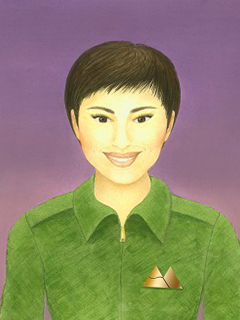
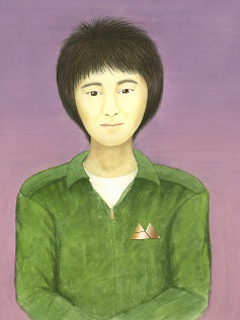
Su Ying
Pseudo-shrubs (detail)
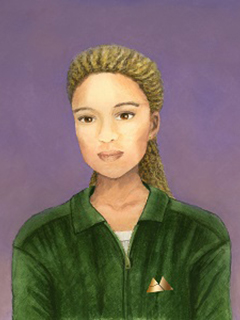
Jorja
Marta
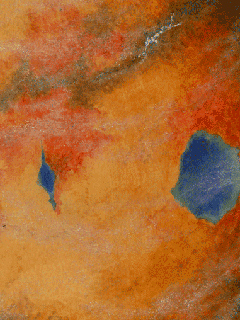
Planet Surface (Detail)
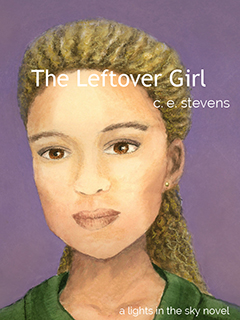
Book Cover for 'The Leftover Girl'
Nurse G
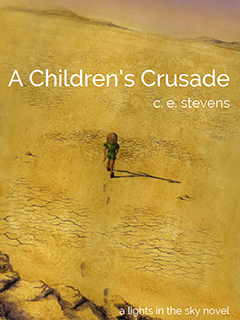
Book Cover for 'A Children's Crusade'
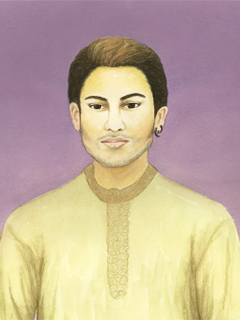
Rai
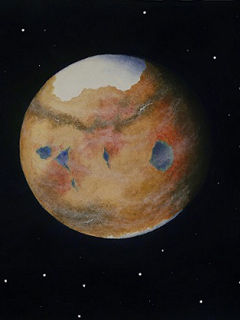
Planet
Priya
Han
Alphane life (detail) , dome in distance
Pseudo-crustacean
The Dome (detail)
Senhora Daguia

Recent Posts

Blog

Blog entry supplemental six: The leftover girl

Blog entry supplemental six: The leftover girl

As I’m now more than one hundred pages into the prequel to Lights in the sky, currently called The leftover girl, although this may change (mainly because the ‘such and such girl’ as the title of a novel has become something of a publishing cliche in the last few years!). If it does change it’s likely to change to The leftover world which is also apposite. One decision I have made is to use my SF non de plume C.E. Stevens, rather than Stephen Clare. This is practical reasons as I can continue to use this website, and I am less likely to confuse potential readers.
As I’ve probably said previously the new novel is written in a mainstream SF style with magical realist elements, and is set entirely on Earth. It has three narrative strands; opening with the story of the protagonist as an adult, continuing with a flashback to Tata’s childhood and adolescence, and then the third strand which follows the life of a third character, Helen Choi.
The Tata narrative dramatises life in Brazil, and by extension throughout the world, following the Collapse (a breakdown of civilisation resulting from climate change and resource depletion). Helen’s story is essentially the story of the Alpha Mission.
The book thus tells the story of Earth in the run up to the departure of the Alpha Mission probe, and what happens afterwards!
There obvious crossovers both within the book, and between this book and Lights in the sky. Tata knew Mrs Choi when she was a child, but never knew why the old woman had taken an interest in her. Her quest is geographical (to reach the fable ‘free communities in Amazonia), but also spiritual (to discover the truth about her own life and origins).
Both characters appear in Lights in the sky, although Helen Choi is only referred to (by Han, she’s his role model!). Tata appears on three separate occasions; twice in dreams/visions experienced by Marta Fernandes, and finally in a chapter of her very own!
One possible strategy I may employ is to use this chapter (The Jungle) as part of the text at the appropriate point in the narrative, which a nice exercise in intertextuality.
My intention is to post the first chapter of the novel on this website on the near future to act as an introduction, once I settle the question of the title!

Blog entry supplemental five: …for that interesting year ahead!

Blog entry supplemental five: …for that interesting year ahead!

This year promises to be ‘interesting’ on a personal, as well as a political level…
Coincidentally, I’m going to be visiting America again in this time of change. Last time I went it was to volunteer for the US National Park Service in 2013 as part of my MA; this time it’s going to be a musical odyssey (Chicago to New Orleans) to mark entering my seventh decade.It will be interesting to take the pulse of America at the start of the Trump presidency, and see how people’s attitudes have changed from 2010 and 2013…
Back on the somewhat firmer ground of my literary plans, a big year lies ahead. My big project will be to publish A Children’s Crusade via an ebook platform and also print some hard copies which I can sell personally. This means that the book will disappear of this website at some point during this year, but I plan to replace it with the pilot screenplay Lights in the sky which also acts as an introduction to the trilogy.
The launch of the ebook will require me to be rather more proactive in promoting my writing than I have been up to now! Marketing tools to be deployed include YouTube readings, press kits, more submissions, more blogs, links to more forums etc etc.
You will also see changes to this website, likely to include a news bulletin to be added to the home page…
Away from promotion and marketing, the writing continues. I’m now more than a hundred pages into my fifth novel, provisionally entitled The leftover girl. The book is effectively a prequel to Lights in the sky, taking place on Earth in the run-up to, and the early years of, the Alpha Mission. It’s framed as mainstream SF novel (with magical realist elements), and for this reason I’ve decided (for the moment, at least!) to publish it under my mainstream pseudonym, Stephen Clare. But this decision may be reviewed (it would require another website for one thing!).
All the best

Blog entry supplemental four: We live in interesting times…

Blog entry supplemental four: We live in interesting times…

The old Chinese curse is proving increasingly apposite in these troubling times. The election of Donald Trump is forcing me to rethink some of the predictions I made in chapter four of A Children’s Crusade. My assumption had always been that a future break-up of the United States would be as a result of the secession of South, the South-West, and Mid-Western states, following a pattern similar to that set in the Civil War. Obviously this was good dramatically as I could evoke many of the Romantic aspects of nineteenth century US history, but it now seems increasingly implausible.
From the vantage point of January 2017, it would seem more likely that any secession would come from the other side; with the prosperous, densely populated, culturally inclusive (and Democrat voting!) states of the East and West Coasts deciding that an electoral system that patently favours the Republicans and leads to the political agenda being set by the underpopulated, insular states in the middle of the country is unsupportable, and making plans to leave themselves!
I look forward (with a certain amount of trepidation!) to developments over the next twenty years, assuming we all live that long!
Happy New Year

Blog entry twenty two: O brave new world

Blog entry twenty two: O brave new world

O brave new world is the suitably emotional climax to volume one, and is now available on this website. I make no apologies for pulling out all the stops on this one! The title is (of course) taken from Miranda’s speech in The Tempest, and was adapted by Aldous Huxley as the title of his famous novel.
In full the couplet reads ‘O brave new world, That has such people in’t!’
In the same way that Shakespeare’s ingenue marvels at the strange new visitors to her father’s island without being aware of the secrets they are concealing, the Children on Alpha 5 have hitherto marvelled at their world without comprehending its darker side…
The chapter marks the start of their disillusionment…
The title is doubly pertinent given the parallels between the eugenics practised in Huxley’s book, and the peculiar circumstances of the Children’s conception!
And at the end of volume one the world is remade, in a way that could not have been foreseen when the novel opened…
The shock and sorrow the crew feel after their friend Sal’s death is palpable to me, and I hope it comes over as forcefully to the reader; I have also tried to put across the new and unwelcome awareness of their own mortality that our little band all feel, as well as dramatising the sheer banality of what we experience in grief and loss…
Significantly it as Jorja who makes the overtures to Marta in the immediate aftermath, not the other way ’round. They have a mutual interest, the welfare of their friend, but it is the younger girl who has maturity, sensitivity and understanding to realise what is needed. This marks a change in Jorja, she’s growing up and making a conscious effort to become a better person, in the aftermath of her experience in the Barrier Range.
Marta, on the other hand, raises another nagging doubt about the benevolent intentions of the Nurses in their conversation on the way back to the Dome, although this is not immediately followed up.
Both girls find their new intimacy awkward, but grief makes strange bedfellows!
There are also further indications of Alphanian sentience (and, for the first time, possible benevolence) in their actions at the crash site, although Han, typically, is sceptical!
A few days later, we have a heartbreaking scene when Priya finally articulates her loss to Marta, together with her feelings of guilt that she wasn’t there to save him!
With the funeral coming up Jorja and Marta have to take charge and more or less shanghai Priya, forcing her to attend Sal’s funeral.
I’m also proud of this scene; both visually (where I reference the Lon Chaney film version of Phantom of the Opera), and for its dialogue.
Nurse Gee stage manages the event, and is of course, in her element! We learn that Salvatore was a practising Roman Catholic, and Marta’s observation as she views his corpse is based on personal experience.
Marta then makes a great speech where she articulates not just the grief our community feels, but also their collective hopes and fears in the troubling new world they find themselves in.
There are of course shades of Romeo and Juliet in Priya’s last goodbye to her love…
Time moves on; we join Marta and Jorge in a discussion which moves beyond the personal into metaphysics, as our heroine explains fully for the first time her new understanding of the world. This takes in predestination, the true meaning of her vision of the Midgard Serpent, and an overt reference to the ‘lights in the sky!’
Later they put their ‘modest proposal’ to Nurse Gee, and are surprised to find she is in full agreement with their plans. Later Marta is cynical about the reasons for Gee’s new enlightened viewpoint; the main narrative closes with Nurse Gee’s ringing declaration that signals a new chapter in the life of the Mission.
But we end with the vision Marta experiences when she links again with the Alphane sentience, foreshadowing some of what is to come later on…
So there we have it, book one closes, but plenty more to come…

Blog entry twenty one: Making amends

Blog entry twenty one: Making amends

Making amends is very much the morning after the night before, when the consequences of Marta’s actions come home to roost. I misquote Genesis 1:1 in the opening passage (substituting world for Earth. as we are on another planet!).
Marta comments that the greyness she thought confined to her dreams has now penetrated everywhere; it has become actual, and has now invaded her waking hours! This is a reference (obviously) to the ‘…grey plain on which…[she]…walked forever…’ from Sleeping Beauty, and the imagery will probably be familiar to readers of the works of Philip K Dick.
The following day she observes, ‘…Now everything was sharp and painful…’ (in contrast to the peace she felt during her suicide attempt), ‘…[and] the world felt raw pitiless and unforgiving…’
I owe a debt here to the writers of Buffy the Vampire Slayer, specifically the scene in Season six when Buffy tells Spike of the struggle she faces just to keep on living after being returned from Paradise. This is not to suggest that Marta’s actions were justified, or that she was necessarily bound for a better place, merely that she sought release from a life she found intolerable…
Our heroine is left to her own devices for a day and half after waking from her coma; Nurse Gee comes to see her but merely informs her that she has been sedated and must sleep, the nursemaid tending to her does not (and maybe cannot speak!). The implication is that Marta is being made to confront her actions (and perhaps repent!).
When people do finally come to see her her their reactions are very different…
Priya is angry, and the scene where she castigates her friend for her selfishness and her thoughtlessness (and ask her why she doesn’t want to live!), still makes me cry…
Nurse Gee is next; as befits a machine she is not judgemental or emotional, in fact she is impressed by Marta’s insight, perception and initiative in solving another piece of the puzzle that is the Children’s origins!.
This is not the reaction that Marta was expecting, but gives me as author the opportunity to provide more background and furnish explanations for what has transpired, by putting this in the mouths of the main characters…
Jorge is next, and he’s scared because he thinks he’s lost her! But when he realises that he hasn’t, that she does now want to live, then their relationship begins to return to familiar patterns and they begin to speculate; this time on the nature of the Alphanian intelligence. This again is a device for putting across what could be indigestible information in a natural way; they are scientists after all, and one of the main ways they relate is through science!
Finally Nurse Amber appears with the twins, and she reproves Marta for her selfishness and stupidity, reminding her (like Priya) that she is now a mother and has a responsibility to her children. As Marta ruefully observes,
‘…my conscience is machine, who’d have thought it…!’
When we reach the coda, time has passed and things have returned to normal; Priya is proposing that they have ceremony, a formal recognition of the unions between all the couples, and is seeking Marta’s support for this!
But the chapter ends on a darker note, setting up a cliffhanger for chapter 22…

Blog entry twenty: The young person’s guide to time

Blog entry twenty: The young person’s guide to time

This blog is designed to be read in conjunction with chapter twenty, The young person’s guide to time, now published on this website. The title is a riff on Benjamin Britten (for all you classical buffs), although I think it’s something of a misnomer; as our heroine is not being confronted with the true nature of time (at least not in this chapter!), but rather the true nature of her existence!
The opening section of chapter twenty was written several months before I reached this stage in the story; so there was always an element of trying to find a narrative pathway through to that particular moment in time, the moment when Marta has to confront the fact that she is not a unique individual, that she is not even a ‘real’ child. This serves to dramatise the fears that all children have at some point in their development; that they are not in fact the offspring of their parents, that they have no place in the world, that they are not special, and that no-one actually loves them!
When I first re-read this chapter I thought I had gone over the top; thinking that Marta’s reaction was too extreme given the circumstances! But while editing for publication I’ve changed my view!
My reaction was partly emotional; as I found (after a period of ambivalence), that I was moved once more, as I had been when I originally wrote the piece! But this was also an intellectual response; because when you factor in the peculiar nature of Marta’s upbringing (as a child with no parents), and combine that with all the traumas (admittedly, mostly self-inflicted) that she has had endure so far in her life, her suicidal impulse is entirely predictable…
But I do think I have put my heroine through too much; in the process stretching dramatic license to the limit ( this is fiction after all!), and if some hypothetical future editor were to suggest changes, one I would probably agree to would be reducing the number of times she is placed in mortal danger…
I like the language in the passage that opens the chapter; the moment when Marta concludes that she’s essentially a forgery achieves the lyricism that I strive for, and the rest of the chapter is basically a flashback to the events that led her to that revelation.
I also decided to lift the lid on the true nature of the Nurses (peeking behind the scenes of the Alpha Mission), presenting Six Gee as ‘she’ actually is, rather than how she presents herself to the Children.
The ‘Eve’s Rib’ passage in Marta’s final remembered dream is an obvious play on Christian creation mythology, Marta also misquotes Matthew 5.29 in line seven; and, of course, her first words (which also close the chapter), are adapted from Shylock’s speech in The Merchant of Venice!
As I mentioned, I went through a period where I became ambivalent about this chapter, thinking it was too melodramatic; but now I think that it is important to demonstrate that there are psychological consequences to the kind of trials that the Children undergo. All too often in contemporary televisual SF, the main characters experience things that would have most of us in therapy for the rest of their lives, without any apparent psychological damage; and I wanted a counterbalance to this.
It’s also important to stress that Marta is now ‘different’; she has grown-up, and views her world (the Mission, her companions, her partner, and Alpha 5 itself!), with a new kind of detachment, that distances her from everybody else.
And this is important for what is to come…
Happy Reading

Blog entry nineteen: Recovery

Blog entry nineteen: Recovery

In chapter nineteen we’re back in the real world with a vengeance, and the consequences of Marta’s willfulness have become apparent…
The scene in the desert owes much to Wim Wenders classic arthouse film Paris, Texas, and the line ‘…her eyes fixed on her own far horizon’ is adapted from the lyrics of a song I wrote in the 1980’s while under the spell of that particular movie.
The landscape of Alpha 5 again becomes a character in its own right, with the scale and implacability of the landscape contrasted with the insignificance, frailty and sheer ephemerality of individual human lives.
A friend of mine recently said to me, ‘…I wish we could all go to your planet!’ and she hits the nail on the head, Alpha 5 is a means of escape (for me as much as anyone!), from a scary and increasingly hostile world; but I would like to make the point that although A5 is a refuge (both metaphorically and literally!), the ‘real world’ is still presented in this novel (most notably in chapter twelve), and the likely future consequences of our present actions are laid bare…
But this, after all, is the role of science fiction (or it should be!), the genre providing an escape from the real world, while at the same time commenting on it…
We can also glimpse the power relationships within the world of the Children, and it is clear that (in the absence of Marta) Priya, although the youngest, is the dominant personality.
The first two sections of Recovery are a fairly conventional search and rescue drama, but what surprised me is how much it moved me when I was re-reading it for the purposes of online publication. The eagle-eyed among you will have noted that Priya uses an outmoded version of CPR when reviving Marta after the rescue ’plane crash-lands. This is because the chapter was written before the new guidelines emerged; I’m minded to keep it that way, it’s my world after all!
In section three we return to the subjectivity of Marta’s unconscious mind. In essence this is a continuation of Sleeping Beauty; our heroine’s physical body may have been rescued, but her mind is still away with the fairies!
Section three, appropriately enough, uses a three part structure:
i) Marta’s debates the nature of Time with ‘the serpent’
ii) Marta as Goddess transcends the Cosmos
iii) Marta (as her childhood self) rides the very-slow-moving train and receives her gift from the Dark Lady
I’d like to acknowledge two influences here; firstly, the late Iain Banks’ wonderful second novel The Bridge, which has had a hold on my imagination since first reading; and secondly, Lewis Carroll (if you haven’t noticed that Marta takes the role of Alice in her exchanges with the serpent, then you haven’t been listening!).
Our sojourn in Marta’s unconscious ends when she wakes…
Another influence, which has only just occurred to me (even ‘though I actually quote his lyrics in Sleeping Beauty), is Jimi Hendrix’s 1983, which can be found on Electric Ladyland.
In section 4, we (and Marta), are back in the real world, and our heroine is finally facing up to the consequences of her actions…
There is some foreshadowing here (in Jorge’s reaction to Marta’s dream), and some bitter self-knowledge on her part; but Jorge’s love for her is able to transcend the barriers that have sprung up between them…
But then we always knew it would…
Bye for now

Blog entry eighteen: Sleeping Beauty

Blog entry eighteen: Sleeping Beauty

Chapter eighteen continues the narrative form experimentation of the previous two chapters; but Sleeping Beauty ups the stakes by taking place entirely in the imagination of the protagonist (NB to access the chapter, hover over the drop down menu ‘Read the book’ and scroll down!).
We are not immediately aware of this however, as the chapter opens with best friends Marta and Priya apparently on yet another routine mission Out! The action shifts by degrees from realism, until it’s clear we’re not in the ‘actual world’ of Alpha 5; but we’re not made aware of the true state of affairs until right at the end of part one (although the title is a giveaway!). So essentially a narrative mislead…
William Blake makes another appearance in the text of part one, and (although I say so myself), I think that the passage that leads up to the Blakean reference is the best piece of writing I had managed up to that point. But it’s not just an exercise in poetics, or lyricism for its own sake; the appearance of the ‘serpent’ advances the story, but to misquote Bryan Ferry, ‘…what’s real and make believe?”
Sleeping Beauty is divided into three sections; each following the same pattern, apparently beginning in the real world, before we dive into the fantastic…
Somewhere I remember describing the series as ‘realistic SF with fantastic elements’, which describes this section of the novel as well as anything. I think the description was in the blurb accompanying one of my unsuccessful attempts to interest a literary agent in the series! I’m aware that trying to market SF in today’s literary scene is (to a large extent) swimming against the tide, and you could see the inclusion of fantastic elements as a nod to the zeitgeist, but bear in mind my literary influences!
In section two, Marta (or at least her unconscious self) begins to realise the truth, and again I’m very proud of of the end of this section, although I acknowledge Philip K. Dick as an influence…
In section three we’re moving into the territory of intertextuality… But how are we to regard the information that is imparted during the episode set in the estate? What is the status of the Marta of the estate, and who exactly is her host?
Again, I’m extremely proud of the end of the chapter where I believe I achieve the lyricism I strive for… The narrative in Sleeping Beauty is deliberately cyclical (obeying the logic of dreams), but there is also a crucial revelation right at the the end of the chapter…
Taken together, the three chapters Around my heart in eighty hours, Disobedient Child, and Sleeping Beauty represent a high point in the trilogy (not that you should stop reading!), where I start to achieve some of the literary goals I set for myself when I started the project…
I hope that you are enjoying reading it…

Blog entry seventeen: Disobedient child

Blog entry seventeen: Disobedient child

After the introspection of the previous chapter, the action resumes in chapter 17. We’re also back with privileged third person narrative as Marta embarks on her long-threatened escape from the suffocating embrace of the Mission…
Disobedient child is self explanatory as a title; although sixteen, Marta still is a child, and even though she’s faced many dangers, she has, in a very real sense, been protected and cosseted by her minders! But rebellion is part of growing up, learning self-reliance and gaining independence; so we have to see her disobedience in this context…
Marta finally confronts one of the fearsome pseudo-crustaceans face to face in this chapter, and her ambivalence about doing so finds an echo in the different terms used to describe the Alphanian in the text. The extreme action she takes, in defying her protectors and risking her life in this way is indicative, not only of her alienation, but also of her wilful nature. Miss Fernandes knows she is right, and is prepared to risk her personal safety to progress her research and prove a point!
The chapter is deliberately episodic, and the sub-headings are designed to emphasize this (as well as being another nice narrative variation!); Disobedient child takes the form of a quest, and indeed Marta refers to her progress as an ‘odyssey’ just before she links to the pseudo-plant at the chapter’s close.
Her final comment before she loses consciousness is testament to both her self-absorption, and her nascent victim complex… She’s not called Marta for nothing!
I also wanted to describe Alpha 5 more fully, and convey a sense of how beautiful the world is, and how much Miss Fernandes loves the place of her birth… A5 is essentially Eden (you’ll not be too surprised to hear!), but it is an eden with both a past, and an uncertain future! The characterization of the planet in this way is essentially canonical, and a tribute to my influences…
There’s also a mythic, almost folkloric aspect to Marta’s quest, illustrated by the language used to describe her alien encounter. Obviously I’m aiming for lyricism in the prose; as well as psychological depth, and that old SF staple, ‘a sense of wonder’! As these qualities are by nature subjective, I’ll leave it to others to decide if I achieve this.
Marta engages in an exercise in Cartesian doubt when she questions her own conclusions regarding the vaIidity of the exchange between her and the pseudo-crustacean; but she decides that true communication (in the sense of a meeting of minds and an exchange of ideas) has taken place between a human being, and a member of another intelligent (and truly alien) species…
Incidentally the comment about true communication only being possible between equals was made by Friedrich Nietzsche!
Re-reading the chapter it’s clear that I owe a small debt to Quatermass and the Pit, and a slightly larger one to the short story The Sound by AE van Vogt.

Blog entry sixteen: Around my heart in eighty hours

Blog entry sixteen: Around my heart in eighty hours

As before, please access this blog after you have read Chapter 16, for which it serves as a commentary…
Around my heart in eighty hours begins a period of narrative experimentation in the novel, and the next three chapters are linked both thematically and stylistically.
In this chapter we are now seeing things wholly from Marta’s POV. The narration switches to a first person stream of consciousness; not original I know, but it indicates that her alienation from the Mission, her lover, and her friends is now almost complete, and I felt that this could not be adequately expressed via my usual use of the privileged third person…
It’s important to bear in mind that Miss Fernandes is extremely self-centred and rather spoiled (as are all of the Children), and cannot be regarded as a wholly reliable narrator; something her closest friends try to gently point out to her.
The use of the poetry of William Blake is happenstance; nearly three years on from writing A Children’s Crusade, I cannot recall the precise circumstances, or the train of thought that led me to reference the Sick Rose, but I have a copy of Songs of Innocence and Experience, and this poem obviously made a profound impression on me. Initially, I couldn’t remember which of the Songs I was recalling, but when I turned to the text I realised which one it was, and how well it reflected Marta’s mood and circumstances!
It wasn’t a big stretch to imagine that the Children’s general education would include English Literature, and that they would study Blake as part of this. This could be termed ethnocentric, but I have already explained why the Mission education programmes manifest an Anglo-Saxon bias [1].
Anyway you have to go with what you know!
The lines that affect Marta the most (and which she references in her narration) are from The Clod and the Pebble, but she is defined by The Sick Rose. although, of course, she doesn’t know it!
We are introduced to another new nursemaid early in this chapter (although her character is not developed), and we also have another oblique reference to the true nature of the Nurses. The original plan had been to withhold this information for the whole of book one, but I think it’s safe to say that the cats out of the bag by this stage!
The source of Marta’s alienation is that she has made a great discovery, but is not believed. Partly this is because she was unable to record her observations and cannot provide objective proof; but her incipient paranoia leads her to believe that there is a conspiracy (orchestrated by Mission Artificial Intelligence), to exclude and marginalise her!
Spoiler alert! There is a conspiracy, but not the one she imagines!
The root cause of her paranoia lies with her profound insecurity; remember that it’s not long since she was being shunned by the other children, and her apparent self-confidence is paper thin!
Marta’s dissatisfaction is not confined to frustrations about her research work being blocked by the machinations of Nurse Gee; she is also unhappy with Jorge and his reluctance (or inability!) to progress their relationship… However, when this is suddenly (and unexpectedly) resolved, she finds it doesn’t really help, because all the other issues are still eating at her!
What infuriates our heroine most of all is the implication that she may be jumping to conclusions and reading far too much into her data, or (even worse) lying, by falsifying her results, in order to gain attention! In short, her objectivity and competence as a scientist is being called into question…
Meanwhile, she must put up with the triumphalism of the favoured children (Rai, Jorja and Han), who have made another important step forward in understanding the Alphanians, by divining how they communicate…
My revival of ‘steam radio’ as the Alphane medium of communication may have been an (unconscious) nod to the ‘steampunk’ genre!
Marta’s paranoia is not wholly irrational, because they are watching and listening; the Mission monitors the Children twenty seven hours a day, and has done for their whole lives! However our heroine (who is a smart cookie!), has started to develop a strategy to circumvent this!
Marta is still a scientist, and continues with her research work throughout all this; but she has started to believe that nobody cares whether she discovers anything or not!
Her ‘achievement’ in being the first (along with Jorge) of them to lose her virginity quickly palls; spoiled by by her realization that even her most private moments are being watched by the Mission, and that it is impossible to escape this surveillance…
This is what finally persuades her that she has to escape, and go off the grid…
I wanted a pop culture reference to go with all the heavy literature, and I thought that one of Jennifer Aniston’s films would fit the bill, having the same resonance for Marta as the romances and screwball comedies of the thirties and forties (i.e. Hollywood’s Golden Age) have for us…
The timescale imposed on the action is deliberate; I wanted the sense of the clock ticking down before Marta takes what she believes is an irrevocable action, and it also sets up the Jules Verne reference in the title nicely.
I could easily have called this chapter The Sick Rose, but that would have been too obvious, although I rather undercut this by quoting Blake’s poem in full…
The Sick Rose is, of course, a conceit that addresses the notion of tainted love, full of obvious and less obvious sexual metaphors. Marta’s love for Jorge is tainted by the knowledge that their moments of love and sexual joy can never truly be their own, not in the world of the Alpha Mission; but it goes further than this as she finds she has now fallen out of love with the very purpose that gives her life meaning, and even (in her lowest moments, with Science itself!
In these circumstances, it’s not too difficult to guess the identity of ‘the worm’ in this tale…
Note
[1] see Chapter 12, specifically the observations of Mr Bhatt