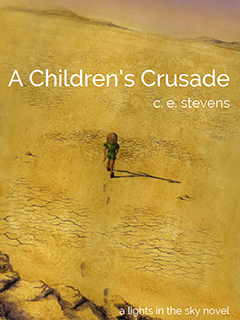
Book Cover for 'A Children's Crusade'
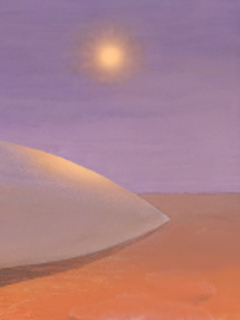
Alphane life (detail) , dome in distance
Pseudo-crustacean
The Dome (detail)
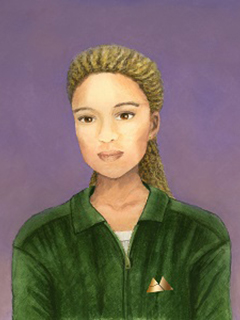
Jorja
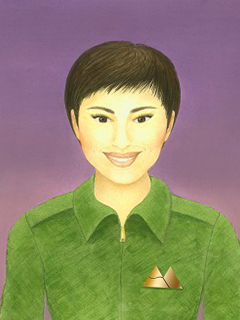
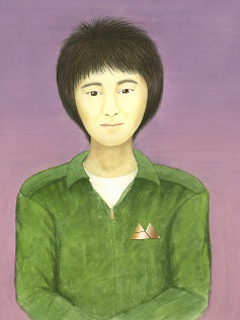
Marta
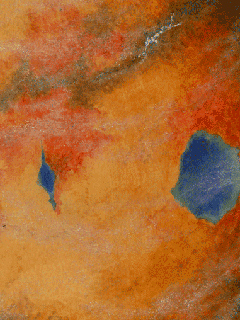
Planet Surface (Detail)
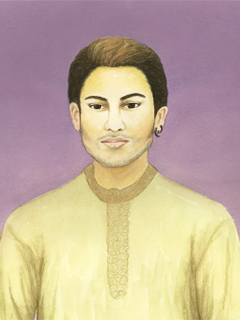
Priya
Pseudo-shrubs (detail)
Senhora Daguia
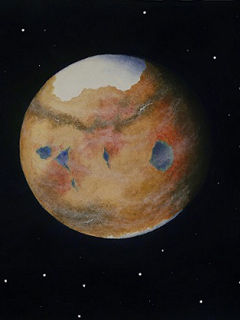
Planet
Han
Nurse G
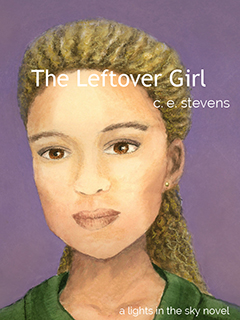
Book Cover for 'The Leftover Girl'
Su Ying
Rai

Recent Posts

Blog

Blog entry fifteen: On the ice

Blog entry fifteen: On the ice

This blog entry should be read in conjunction with chapter fifteen. On the ice is almost self-consciously visual and descriptive, as if to make up for terseness of previous chapters, with their emphasis on dialogue and characterization!
I owe an obvious debt here to James Blish’s wonderful novel of polar exploration, The Frozen Year, published to coincide with International Geophysical Year in 1957 (coincidentally the year of my birth, so I span the Space Age, but that’s another story!). The embryonic and aforementioned Age makes an appearance at the end of this novel with the announcement that the Americans have launched the first artificial satellite! Clearly, in 1956 nobody in the USA would have believed that it would be the Soviet Union that launched the first successful space probe!
None of this detracts from the grandeur of Blish’s epic…
Sal’s optical phenomenon described in On the ice is also a direct lift from Blish’s novel where it’s given the name ‘copper dawn’! I have no idea if it has a real name, but I assume its a real phenomenon… Writing this blog now, it occurs to me that Marta also shares the fate of the discredited astronomer in The Frozen Year, in that she makes an amazing discovery but is unable to furnish the necessary scientific proof…
In narrative terms, On the ice continues the process whereby the Children explore their world. As the Equatorial regions are now considered too dangerous, they venture north to explore one of the planet’s two vast polar ice caps.
At this stage in Alpha five’s history both ice caps are immense, and lock up most of the world’s water between them; but they are also now in retreat, an indication that A5’s climate is now changing, and things are moving in favour of its indigenous inhabitants…
The interplay of climate and biosphere is to become a major theme of the series, and thus a driver of the action…
This process starts with the second of Marta’s two discoveries (the one she can’t prove!).
In this chapter we are presented with the gadfly activity of the Children, whose ephemeral lives buzz around (and are contrasted with), the implacability of the landscape, and the monolith that is geological time…
Marta and Priya confront this disjuncture when they discover the ‘ice crusty’ sealed in its blue prison…
We also observe the Children engaged in routine research (the nuts and bolts of their respective disciplines), and are reminded that they are members of a scientific expedition. Later, circumstance conspires to leave Marta and Sal alone together, an unfamiliar combination, which is prolonged by the arrival of the storm…
Finally, in the interplay between Marta and Priya, we see again that the younger girl is wise beyond her years, and is the grown-up in the relationship…

Blog entry supplemental three: A real SF writer, already!

Blog entry supplemental three: A real SF writer, already!

I noted with interest a few weeks ago that astronomers think they have discovered a potentially habitable planet in orbit around Proxima Centauri, the smallest star of the Alpha system (and the nearest star to Earth)…
Of course, in my fictional Centauran system, the habitable planet orbits Alpha Centauri B, but I can’t help feeling that I’ve passed some sort of test as a science fiction writer, by making a prediction that has turned out to be true!
There have been been intelligent beings placed in the Alpha Centauri system before (the Centaurans in the ‘90’s SF television series Babylon 5 spring to mind), but there’s never been serious speculation about such a planet been located so close in the real world!
A Children’s Crusade (indeed all of the trilogy novels), can be viewed as a series of short stories that just happen (when read together) to make up a novel…
The origin of the series was, it must be remembered, a SF story that I submitted (unsuccessfully) to Analog magazine; and the work exists in two forms: a series of short stories, and a novel of twenty two chapters!
The number of chapters is significant; twenty two (or so it appeared to me) was the average number of episodes making up a typical season of American television drama, and Lights in the sky was conceived from the start with adaptation in mind!
So far, I have written one screenplay, a pilot episode for the series, which will soon be available on this website.
Ironically, it needed two chapters worth of material to produce one screenplay of just under forty minutes; the minimum needed to fill one standard hour-long slot on American television.
So I guess that’s a half season then!

Blog entry fourteen: Significant others

Blog entry fourteen: Significant others

This blog entry should be read in conjunction with chapter fourteen. Significant others is somewhat episodic and something of a mixed bag. It’s function is essentially to advance various plot elements, and so lacks the strong narrative of the chapters it sits between.
This is all well and good; a novel that consisted solely of action sequences would probably make no sense, and would also lack depth and effective characterisation.
We open with Marta Fernandes viewing an Earthside packet sent by Miss da Guia; two things have become clear: Miss da Guia’s career plans have gained traction, and Marta Fernandes is starting to develop a greater awareness of the role the media plays on the home planet.
She understands that the Children on Alpha 5 are now ‘famous’, but hasn’t begun to comprehend what this means!
For the moment events on Earth are only really a mildly diverting sideshow as she’s much more more exercised by things happening closer to home. Her anxiety over whether the twins will bond with her, and regard her as their real mother. Her battle of wills with Rai and Jorja over the naming of the infants. Her fear that she will be permanently sidelined scientifically by the Mission authorities, combined with her struggle with Nurse Gee over how to progress her work with ‘Oswald’, her pseudo-crustacean research subject…
She also learns something really important about the crusties, from Han of all people, although she has to dig the information out of him.
Marta wins some of the battles, but loses others and these outcomes will be pivotal in how things develop from here on in…
For now, the chapter finishes on a more hopeful note as our little community comes together to welcome its two youngest members…

Blog entry supplemental two: The Sick Rose and other references

Blog entry supplemental two: The Sick Rose and other references

As I’ve probably already said, I understood from the start that I would write only one extended work of science fiction. A prequel (or should that be sequel) to Lights in the sky is underway, but although the Alpha Mission looms large in the background, the new novel is already taking a somewhat magic realist turn! So far I’ve only got provisional titles (it was going to be the The World we left behind, but now the ‘left-behind’ or possibly ‘the left-over World’ are under consideration). One decision I have made is that I will write it under my mainstream nom de plume, Stephen Clare…
I think it’s important to try and articulate why I’ve written the trilogy and where the inspiration came from. The original inspiration is actually a nonfiction work, Brian Aldiss’ history of science fiction, Billion Year Spree (later published in a revised and expanded edition as Trillion Year Spree co-authored with David Wingrove), which I essentially used as the syllabus, if you like, of my own self-guided study of SF and related literature. Of course, like all generalisations this is an oversimplification! I started reading SF and other forms of imaginative literature well before I came across a dog-eared copy of Aldiss’ SF history in an East London second hand bookshop; but if you go through the book, all the fictional inspirations for LITS are there. So, Mr Aldiss, I am forever in your debt!
I’ve getting ahead of myself recently; the reason being that as I prepare more chapters of A Children’s Crusade (a Kurt Vonnegut reference!) for publication on this website, the inspiration for specific passages and episodes within the novel become apparent!
For example, I specifically reference William Blake in a future chapter by the simple expedient of having the protagonist, Marta Fernandes, study the great London mystic as part of her continuing education. Like the rest of the Children, Marta starts by resenting having to study such an apparently irrelevant subject as English Literature, but unlike the rest she ends up drawing parallels between her rather strange existence and subject matter of one of the Songs of Innocence and Experience, The Sick Rose.
Later references include Lewis Carroll (from Alice’s Adventures underground), and in the same chapter, the rather obvious debt I owe to the writings of Philip K Dick…
Both, of course, feature in Billion Year Spree…

Blog entry thirteen: Another Girl, Another Planet

Blog entry thirteen: Another Girl, Another Planet

As before this blog is designed to be read in conjunction with the accompanying chapter, now published on the site. To access the chapter, click on the dropdown menu Read Book One, and scroll down…
The title of chapter thirteen is yet another of my pop culture references, and the chapter itself is broken into three parts, each one a two-hander… The first of these features Marta and Priya, out on Mission together, and focusses on their developing friendship (with its ups and downs), a crucial driver of the action later on…
The second half of the chapter has two shorter scenes; the one between Marta and Jorge, that follows her return, comments on what has taken place earlier and develops into a philosophical debate on the true nature of Alpha 5. The coda takes the form of a short exchange between Marta and Rai which drives the plot forward…
The chapter closes with the enormity of what they are doing finally dawning on our heroine, who grows up a little more as a consequence…
During Another Girl, Another Planet, the girls make an incidental discovery about the crusties (they venerate their dead), but their main investigation yields nothing as the pseudo-crustacean ‘Harvey’, the main subject of their experiment steadfastly refuses to engage with the machine they send to interact with it, as Marta had predicted… The girls have also come to understand that the main thrust of Mission exobiological enquiry has shifted, to the pods and their theorised collective intelligence, and their work has been sidelined as a result…
Ever the arch-rationalist, Marta is sceptical about the notion of ‘pod’ intelligence, partly because she is miffed that her insights are being ignored, but mainly because she is instinctively suspicious of anything that smacks of spirituality…
There’s some action in this chapter (it’s still an adventure story, after all!); Marta nearly dies (again), but this time as the result ‘of a stupid accident!’ Priya saves her (as she saved Sal), which strengthens the bond between them; a bond that cannot be threatened by the scientific spat that follows. Although this disagreement will prove to be the harbinger of things to come…
Prior to the accident, Priya had been urging her friend to talk to Han who has data that would support her theories about ‘crusty’ development. Marta is reluctant, and is forced to confess to her rather hamfisted and utterly futile attempt to get the boy to take an interest in her when they were out on Mission in Carl Sagan minor, the year before…

Blog entry twelve: The Truman Show

Blog entry twelve: The Truman Show

Blog entry twelve: The Truman Show
In chapter twelve of A Children’s Crusade, entitled the Truman Show, we’re back on Earth; specifically the Earth of 2106!
The Earth we’re presented with is in stark contrast to the claustrophobic world of the Alpha Mission, with its nine human crew members; rather its a world of countless billions, each individual scrabbling for their place in the sun…
We get our first inkling as to the status back home of the Mission and the Children, with Marta da Guia’s rather jaundiced description of Marta Fernandes as a ‘…[Brazilian] national hero…’
There are other references later in the chapter (to the craze for all things crusty, and the cult of the Star Children), which confirm this first impression.
We are also told (indirectly) that the relationship between Marta on Alpha and her ‘Earthsister’ might be something more than interstellar pen pals, but the precise nature of the relationship eludes us. Eludes us, that is, until the crucial moment when Marta da Guia, fleeing civil disorder (and the implied threat to her privileged existence), says a prayer for her sister at the roadside shrine…
But how can this be?
Elsewhere in the chapter more detail is sketched in, of a world previously only dimly glimpsed. We begin to appreciate the hold the Networks have over the Mission, and we learn how this came about. And crucially, how the lives of the expedition crew members have been repackaged as cheap entertainment for a mass television and online audience…
We learn more about interface technology and the advantages it gives to the elite who use it; also learning about the downside…
And finally, we are vouchsafed a glimpse of a society in crisis…of a world descending into chaos…
On that cheery note…

Blog entry supplemental: …it’s about time

Blog entry supplemental: …it’s about time

The series is now complete; I put the finishing touches to The Lost Colony (the final book in the trilogy) just over a week ago, bringing a three year plus writing project to an end.
I’m not sure how I feel…!
Clearly, I’m satisfied that I’ve done it, that I’ve completed a coherent piece of writing, more than one thousand pages (and nearly 300,000 words) long, but feeling slightly bereft that my story is now complete. Of course, I can re-visit the world I’ve created any time I want, but never again will I go there not knowing how it all ends, with the delicious thrill you get from the realisation that you’re still writing the story (or possibly the story is writing itself, using you as the medium?), that your fictional world is still evolving, and everything is still up for grabs! I have viewed the series as a detective story, with me in the role of detective…but now the case is closed…
My intention when I embarked on Lights in the Sky more than three years ago, was to write a post-modernist SF series, and I feel I have largely succeeded…
But how is it postmodernist?
Well, it incorporates a number of the features which have characterised postmodernist literature. Specifically, pastiche and a rather wholesale mixing of genres: including detective fiction, YA, fairy tales, the adventure story, SF (obviously), future history, coming of age, family saga etc…
Thinking I’d only ever write one science fiction work, I decided to chuck everything in! But, as often happens, the process of writing changes your intentions along the way, so there will be a fourth book, a companion volume, set on Earth, and (depending on your relativistic standpoint), either a prequel or a sequel to the Alpha 5 narrative…
Magic realism is also present, through the use of fairy tales and dream sequences; also fabulation, through the incorporation of fantastic elements; temporal distortions, and altered states that turn out to have objective reality, although this cannot be because it would violate relativity! My text also incorporates characters with similar names who are in fact doppelgangers! (there are three in the text!) A scientific explanation is advanced for both of the above (in the case of the relativistic paradoxes, this is based on my rather imperfect knowledge of the phenomenon of quantum tunneling!). This one of the advantage of SF as a form, one can always reach for science (real or imaginary) to provide explanations!
As SF, the text features technology heavily, but also hyperreality; specifically through the game show that features the Children as unwilling actors in a scripted narrative, produced and stage-managed by the robots, acting as agents for the shadowy Mission…
In addition we have paranoia; ‘…the belief in an ordering system behind the chaos of the world’. In Lights in the sky, this system has three distinct agents acting for it; the Mission (of course), the Alphanians, and behind them all, the Divine Architects, who we never actually meet…
My use of genre tropes is obviously self conscious, but not consciously ironic! I have no desire to distance myself from or deconstruct these genre elements which I love, and have loved, in many cases since childhood…
Clearly, I’m a fan of narrative form experimentation (which is in itself postmodern), but this is not an absurdist Universe, and the tale does come to a final resolution, which is less so…
You may become aware that the narrative is intended to work on a number of levels, however it’s not necessary to fully understand all of them to gain enjoyment from reading it…
We have paradigm shifts at the end of each book, and, oh yes…! It’s about time…

Blog entry eleven: Home

Blog entry eleven: Home

This blog entry accompanies Home, the third and final part of an extended story that closes the first half of A Children’s Crusade, and should be read after reading the chapter…
Again, we’re in adventure story territory, and the conclusion of the Children’s exploits in the Equatorial regions also brings the first part of the tale to a close…
So where do we find ourselves?
At the end of per ardua, the Children’s immediate difficulties have apparently been resolved… Everyone’s safe, everyone’s now paired-up (with the exception of the childlike Raj!), and two new children (the first of the second generation!) have been born… They’ve made significant progress in understanding their world and are beginning to comprehend (albeit dimly!) the true nature of A5’s indigenous life…
Problems still remain, however! The Equatorial regions have been declared too dangerous for further exploration, and food supply is still an issue…
On a psychological level two significant things have happened; the Children have gone from the womb-like environment of the Dome out into the world, confronting it as adults for first time; secondly, Marta at least, now regards the planet (rather than just the Dome) as hers for the first time. This is the significance of the chapter’s title!
It would too much of a stretch to say that all of her teammates are on the same page with this, but at least some of them will begin to move in the same direction…
Jorja will not be among them, however! Her recent travails have scarred her mentally, and she now regards Alpha 5 as a hostile place, one that threatens her and the boy she loves! And the threats aren’t just coming from outside the Dome…!
The last paragraphs are instructive. It’s here that Marta’s conclusion that Alpha 5 really is home is revealed. It’s also here that one of the major themes of the series is first alluded to, the drama of climate change made actual. Finally, there’s a major revelation right at the end of the chapter…

Blog entry ten: the Age of Exploration

Blog entry ten: the Age of Exploration

As before, this blog entry accompanies chapter ten of A Children’s Crusade and should be read in conjunction with it…
The title The Age of Exploration is alluded to in the previous chapter and is intended to suggest that this is the novel as adventure story. Following American television convention we’re into the second part of a three part story; for this reason the narrative is rather heavy on exposition.
The slightly archaic speech patterns of the children are a deliberate echo of the classic children’s adventure stories that the first part of Lights in the sky pastiches (a sort of ‘Five go Mad in Space’!). But there is a reason for why they speak this way, (to be revealed in chapter twelve), and the formality of their use of Standard English is counterbalanced by the extreme informality of their use of the slang argot, Grok!
(NB the website boasts a complete glossary of all the unfamiliar Mission and Grok words used in the novel)
Following the convention set in the previous chapter, the passages in italics indicate action seen from Jorja’s POV; although again I’m using third person limited narration rather than first person (that will come later!). In this chapter Jorja begins to realise the serious of their situation; as Marta comments,
‘…they’ve really got themselves in a fix!’
By the start of the chapter Rai has apparently regained his equilibrium and has made an important discovery, while Jorja has concluded that the whole adventure is a terrible idea; the discovery of the sleeping pseudo-crustacean in the pod grove only adds to her conviction. This puts her at odds with her best friend.
It’s not clear from the format of the website, but A Children’s Crusade is divided into two parts (note to self, must fix this!). The subtitle of chapters one to eleven is the first half of a commonplace Latin tag, per ardua, and I think you’ may be able to guess what part two is called! I’d like to point out that this is not a reference to the Royal Air Force, and in fact I got the idea from a short story by Isaac Asimov…
In this chapter the children’s difficulties do become a bit overwhelming, and Marta expresses their growing apprehension when she says,
‘…I’m not sure I like the Equatorial regions…’
Essentially the kids are now completely out of their comfort zone as they are forced to take on adult roles and face their first real crisis as an expedition. Marta, in particular, is tested and and steps up to the plate showing true courage, initiative and resolution, but then we always knew she would…
Hope you enjoy the chapter, until next time…

Blog entry nine: If six were nine

Blog entry nine: If six were nine

This post accompanies chapter nine of A Children’s Crusade and should be read in conjunction with it. The title is a fairly obvious musical reference, although I changed the grammar to fit the context; the fact that it’s the ninth chapter was just coincidence, but the action does represent a series of plot reversals (from six to nine is not just an expansion, but also an inversion), although not all of these are immediately obvious. What is obvious is that Marta’s role as Mission rebel has been decisively usurped by her arch enemies, Rai and Jorja, who go much further than she would have ever dared at this stage in her personal journey!
The focus of the story shifts; we are not seeing entirely from our heroine’s POV, and this is reflected by a change in the narrative style. In previous chapters my normal practice has been to use a privileged third person, telling the story as if we’re looking over the protagonist Marta Fernandes’ shoulder. We shift briefly to Jorge’s POV in Fear of flying, but in If six were nine, longer passages are seen from Jorja’s perspective, and the use of italics delineates this…
This can be regarded as foreshadowing, letting us know that Marta Fernandes is no longer going to be the centre of everything; and from a psychological point of view this represents a development in her thinking, the point in a child’s life when she realizes that the world doesn’t entirely revolve around her!
We learn more about the topography of Alpha 5; we now know it has an active volcano, and vast plains beyond the Barrier range which even have lakes. We also get a glimpse of the Polar Barrier where the northern ice sheets begin. The children begin to take possession of their world by naming bits of it!
We learn that Jorja’s loathing of Marta is profound and this is one of the reasons she agrees to Rai’s plan; and the social politics of the expanded group come into sharper focus!
We also learn a lot more about Alphane ecology and its implications for life on the planet. Marta gets to show her leadership qualities once more, but another potential rival emerges in Sal…!
But above all else this is a great adventure! The crew are pioneers, but pioneers who are still children, with all that entails. So on one level it’s a SF Swallows and Amazons at this point in the chronology, but children grow up…
Re-reading the chapter while preparing this post, I realised how much changes in this episode of the story, and how pivotal it actually is. So in a sense the world is turned upside down as six becomes nine…