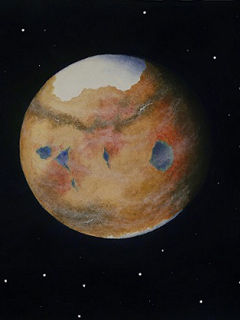
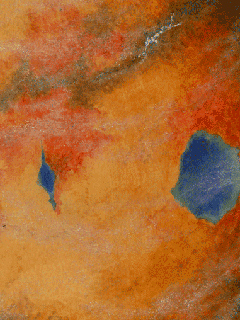
Planet
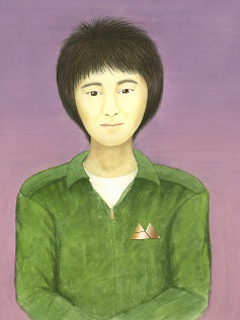
Rai
Pseudo-crustacean
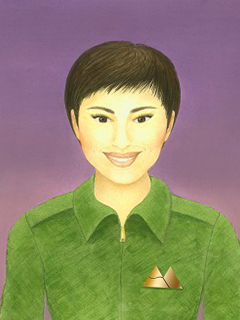
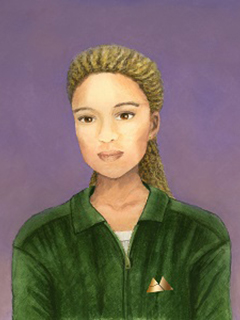
Su Ying
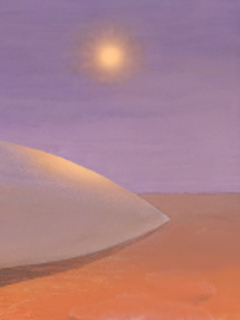
Planet Surface (Detail)
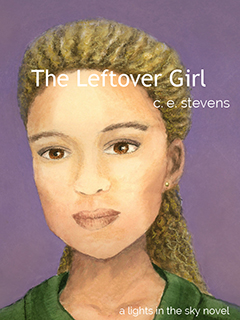
Book Cover for 'The Leftover Girl'
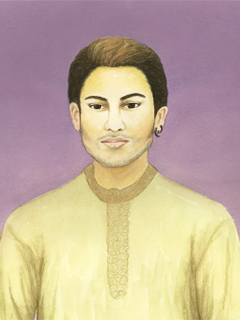
Han
The Dome (detail)
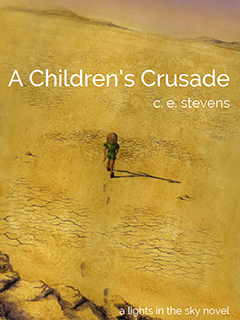
Book Cover for 'A Children's Crusade'
Priya
Alphane life (detail) , dome in distance
Marta
Pseudo-shrubs (detail)
Nurse G
Senhora Daguia
Jorja

Recent Posts

Category: Lights in the sky

Blog entry supplemental nine: the wheel is turning

Blog entry supplemental nine: the wheel is turning

Apologies for not blogging for a while; but I’ve been away, in America, in fact! This was a road trip I took with my mate, Rob… We both play music and we’ve played together in various bands for the past twenty years; so this was a musical odyssey!

We flew to Chicago and proceeded south, mainly (but not exclusively) following the path of the Mississippi… I did the driving (to St Louis, Missouri, Nashville, Memphis, Natchez, Mississippi, ending up in New Orleans); the total distance is not far short of 1500 miles and I did that in nine days, driving on alternate days…

So what’s this got to do with SF and the Lights in the sky series, I hear  you ask?  Well, I’m getting to that!

The trip was a chance not only to visit and pay homage to old musical heroes and discover new ones (Rhiannon Giddens and Gary Clark jr. at the Chicago Blues Festival were particularly memorable!), but also a chance to get away from my life; away from the writing and away from my claustrophobic little island!

I completed part two of The Leftover Girl, just prior to leaving and I’m thus between two thirds and the three-quarters of the way through the book. The first two sections are called The Road, and …to Hell, and the final part will be called …paved with good intentions, so you probably get the drift…

Time away from a work-in-progress is important because it helps give you perspective, vital for a writer. I re-read the section I’d just completed on my return in preparation for starting on the final leg of the literary journey; and I realised something that, although obvious, just hadn’t occurred to me in the rush to complete part two of the book before my departure. The revelation is that the second character in my novel, Dr (later Professor) Helen Choi, ends her life in despair; concluding that she has been in error, pursuing false scientific goals and denying her essential nature. She has lived her life in maya, the world of illusion, effectively denying her own spirituality… She dies hoping that when she meets her husband (‘…in whichever version of the afterlife she is bound’), he will find it in his heart to forgive her…     

The second conclusion I came to (the start of this came while watching the aforementioned artists in Millennium Park, Chicago), was that after three terrible years things are finally moving in our favour once more… Chicago Blues was important because I was disillusioned with music (which for a songwriter is my own version of despair!).

A bit of context is needed here! For those of you unfamiliar with the form, blues festivals in the UK consist of a few hundred (mostly) blokes my age or older, standing ‘round drinking real ale and watching acts even more ancient than they are!

Chicago was different; the first thing we saw (the Blues Village stage), was just like UK blues festivals, and we nearly left at this point! But I looked at the flyer and saw that Rhiannon Giddens (for Christ’s sake!), was performing on the main stage and she was just about to start! For those of you who don’t about her she’s immensely talented as a writer and performer, utterly beautiful, from North Carolina (my favourite out of the twenty seven states of the Union I have visited!), and the possessor of the best voice God ever gave a woman!

We moved to the fantastic open-air auditorium in Millennium Park (think Frank Gehry’s Guggenheim Museum in Bilbao!), and were presented with at least twenty thousand people in the open air-bowl that forms the arena! And these people weren’t old gits like me and Rob, they were young people, of all races, who love music that most young people in my country wouldn’t be seen dead grooving to… The reaction to Rhiannon Giddens was ecstatic enough, but that was nothing compared to the welcome they gave to Gary Clark jr, the new Jimi Hendrix, and someone I hadn’t even heard of !

Not only did this restore my faith in music, but I realised that things in general are changing! It’s not just music; Jeremy Corbyn’s popularity with young people in the UK (as evidenced by his reception at Glastonbury!), the totally unexpected election result, the retreat of Fascistic populism everywhere etc etc

The wheel is indeed turning; favouring authenticity rather than artifice; art rather than commerce; individual expression rather than Simon Cowell-mentored posing; idealism rather than self-interest!

Finally, we seem to be throwing off the twin dead hands of Postmodernist ‘irony’ and neoclassical economics, and discarding the appalling cynicism they engendered…and it occurs to me that this can only be good for me personally, because the type of fiction I write may even come back into fashion…

I talked about the zeitgeist in a previous post; well, I think its just shifted…

C.E. Stevens  June 2017

Blog entry supplemental eight: Tapping into the zeitgeist

Blog entry supplemental eight: Tapping into the zeitgeist

A few months ago I commented on the discovery of a potentially ‘Earthlike’ world in orbit around Proxima Centauri, and gave myself a pat on the back for very nearly predicting this in my SF series Lights in the sky. In my series the habitable world orbits Alpha Centauri B, rather than Proxima Centauri, but this is really a detail, given that the chances of finding such a world this close (less than 5 light years away), were dismissed as astronomical (pun intended!), prior to the discovery!
But it’s happened again!
Stephen Hawking’s forthcoming BBC documentary Expedition New Earth argues that we have approximately one hundred years to send a successful colonizing expedition to another habitable world. Lights in the sky is (of course) based on this premise, and charts the progress of such an expedition. The strapline of the Alpha Mission, the organisation behind the endeavour, is ‘Mankind’s lifeboat’, a recognition of the fictional threats to the survival of the our species (or at the very least of our civilization and our culture) that prompt the attempt. The series is set in a world where many of these potential threats have become all too real; where climate changes, rising sea levels, resource depletion and environmental degradation have led to war, famine, political instability, and mass migration, threatening the continued existence of our civilization and our culture.
Professor Hawking added a couple of new dangers that I had overlooked; specifically an asteroid strike, and new pandemics that our current antibiotics would be unable to control. The last of these was given new urgency (in my mind) by an article I read recently that warned of the dangers posed by the melting of permafrost throughout the Arctic and Antarctic regions. These (it argues) have the potential to release long-dormant microorganisms on human (and animal) populations, which would lack any resistance to them.
Critics of Hawking’s thesis have made a number of reasonable points, including the contention that sending a few colonists would do nothing for the billions left (presumably to die), back on Earth, that spreading our destructive culture to other worlds is hardly the actions of responsible culture, and finally, that the only winners in this scenario would be the Elon Musk’s of this world who would stand to make a killing in the inevitable hysteria that would follow a serious attempt to mount such an exhibition.
Not being a journalist I haven’t viewed the programme, and like the rest of us I will have to wait for it to be broadcast. But, in writing the series, I did think long and hard about the issues and do a fair amount of research.
I do think (even if a I say so myself!) that I have done a good job of reflecting many of the issues and concerns now being raised. The Alpha Mission, as portrayed in the trilogy, is very much the creation of a privileged elite. This elite is threatened by a popular uprising resulting from the dislocations the planet faces in my fictional future, and is opposed by radical elements who ( unsurprisingly), argue that the very existence of the Mission represents a huge distraction from the need to change our ways here on Earth, and which (even if successful), will do nothing for the mass of humanity.
Later on in the series, the expedition itself faces crucial choices; do they attempt to pursue the policies and philosophy of the organization which sent them (which I have characterised as Abrahamic!), or do they attempt to live in harmony with the biosphere of their new world.
I must stress that Lights in the sky is a work of fiction, and is not intended as futurology! I have also presented here a necessarily simplified take on a very complex series of novels; there’s a lot more going on, thematically and philosophically! But like all intelligent science fiction it attempts to dramatise the issues that face our culture and our species.
If you’ve come this far I would suggest that you start reading the first volume of the trilogy, A Children’s Crusade, which is serialized on this website, as well looking at previous posts which discuss many of the issues raised in the series.
C E Stevens May 2017

Blog entry supplemental seven: …if we had but world enough and time

Blog entry supplemental seven: …if we had but world enough and time

One of the principal attractions (to me) of writing science fiction is that you get to create your own world. This even has a technical term (it’s called world building!), and formed part of the syllabus of the one day course is writing SF that I did three years ago.
Of course, any form of creative writing involves a bit of this, but with mainstream fiction you’ve got much more to go on! SF and Fantasy require much more creativity in this regard as you’re often starting from scratch. This has its own perils; fantasy and sword and sorcery novels in particular tend to suffer from a plethora of daft (sometimes faintly ludicrous) names for things, people, beasts, countries, worlds etc etc.
To avoid this I’ve tried to ground my narrative with a greater sense of realism by writing the near (and hopefully horribly plausible) future. It’s really an alternative history (currently a popular genre, with the success of Amazon Studio’s television adaptation of Philip K Dick’s novel The Man in the High Castle), but this is future history rather an alternative past!
As I’ve said, this notion is extremely seductive as you get to play God, but also extremely satisfying and comforting as you create a world that you, the author, can escape to. And Lord knows we need that at the moment!
Mainstream critics (and even some authors) can be extremely disparaging about speculative fiction of all kinds; but this is essentially grounded in ignorance and a rather sniffy attitude towards genre fiction in general!
Any decent SF (or Fantasy) novel will contain all the characterisation, narrative experimentation, and philosophical speculation of a comparable mainstream novel, but in addition will require the creation of a convincing world, right down to the last detail! This is very complex and challenging and some of our (so-called) critics should give it a try!
One of the most challenging aspects is the so-called timeline (i.e. keeping all your ducks in a row temporally!), and the foregoing diatribe serves to introduce a new feature coming soon to the Lights in the Sky site; the Alpha Mission timeline, which will soon be added by my good friend Rob Tyler.
CE Stevens April 2017

Blog entry supplemental six: The leftover girl

Blog entry supplemental six: The leftover girl

As I’m now more than one hundred pages into the prequel to Lights in the sky, currently called The leftover girl, although this may change (mainly because the ‘such and such girl’ as the title of a novel has become something of a publishing cliche in the last few years!). If it does change it’s likely to change to The leftover world which is also apposite. One decision I have made is to use my SF non de plume C.E. Stevens, rather than Stephen Clare. This is practical reasons as I can continue to use this website, and I am less likely to confuse potential readers.
As I’ve probably said previously the new novel is written in a mainstream SF style with magical realist elements, and is set entirely on Earth. It has three narrative strands; opening with the story of the protagonist as an adult, continuing with a flashback to Tata’s childhood and adolescence, and then the third strand which follows the life of a third character, Helen Choi.
The Tata narrative dramatises life in Brazil, and by extension throughout the world, following the Collapse (a breakdown of civilisation resulting from climate change and resource depletion). Helen’s story is essentially the story of the Alpha Mission.
The book thus tells the story of Earth in the run up to the departure of the Alpha Mission probe, and what happens afterwards!
There obvious crossovers both within the book, and between this book and Lights in the sky. Tata knew Mrs Choi when she was a child, but never knew why the old woman had taken an interest in her. Her quest is geographical (to reach the fable ‘free communities in Amazonia), but also spiritual (to discover the truth about her own life and origins).
Both characters appear in Lights in the sky, although Helen Choi is only referred to (by Han, she’s his role model!). Tata appears on three separate occasions; twice in dreams/visions experienced by Marta Fernandes, and finally in a chapter of her very own!
One possible strategy I may employ is to use this chapter (The Jungle) as part of the text at the appropriate point in the narrative, which a nice exercise in intertextuality.
My intention is to post the first chapter of the novel on this website on the near future to act as an introduction, once I settle the question of the title!

Blog entry supplemental five: …for that interesting year ahead!

Blog entry supplemental five: …for that interesting year ahead!

This year promises to be ‘interesting’ on a personal, as well as a political level…
Coincidentally, I’m going to be visiting America again in this time of change. Last time I went it was to volunteer for the US National Park Service in 2013 as part of my MA; this time it’s going to be a musical odyssey (Chicago to New Orleans) to mark entering my seventh decade.It will be interesting to take the pulse of America at the start of the Trump presidency, and see how people’s attitudes have changed from 2010 and 2013…
Back on the somewhat firmer ground of my literary plans, a big year lies ahead. My big project will be to publish A Children’s Crusade via an ebook platform and also print some hard copies which I can sell personally. This means that the book will disappear of this website at some point during this year, but I plan to replace it with the pilot screenplay Lights in the sky which also acts as an introduction to the trilogy.
The launch of the ebook will require me to be rather more proactive in promoting my writing than I have been up to now! Marketing tools to be deployed include YouTube readings, press kits, more submissions, more blogs, links to more forums etc etc.
You will also see changes to this website, likely to include a news bulletin to be added to the home page…
Away from promotion and marketing, the writing continues. I’m now more than a hundred pages into my fifth novel, provisionally entitled The leftover girl. The book is effectively a prequel to Lights in the sky, taking place on Earth in the run-up to, and the early years of, the Alpha Mission. It’s framed as mainstream SF novel (with magical realist elements), and for this reason I’ve decided (for the moment, at least!) to publish it under my mainstream pseudonym, Stephen Clare. But this decision may be reviewed (it would require another website for one thing!).
All the best

Blog entry twenty two: O brave new world

Blog entry twenty two: O brave new world

O brave new world is the suitably emotional climax to volume one, and is now available on this website. I make no apologies for pulling out all the stops on this one! The title is (of course) taken from Miranda’s speech in The Tempest, and was adapted by Aldous Huxley as the title of his famous novel.
In full the couplet reads ‘O brave new world, That has such people in’t!’
In the same way that Shakespeare’s ingenue marvels at the strange new visitors to her father’s island without being aware of the secrets they are concealing, the Children on Alpha 5 have hitherto marvelled at their world without comprehending its darker side…
The chapter marks the start of their disillusionment…
The title is doubly pertinent given the parallels between the eugenics practised in Huxley’s book, and the peculiar circumstances of the Children’s conception!
And at the end of volume one the world is remade, in a way that could not have been foreseen when the novel opened…
The shock and sorrow the crew feel after their friend Sal’s death is palpable to me, and I hope it comes over as forcefully to the reader; I have also tried to put across the new and unwelcome awareness of their own mortality that our little band all feel, as well as dramatising the sheer banality of what we experience in grief and loss…
Significantly it as Jorja who makes the overtures to Marta in the immediate aftermath, not the other way ’round. They have a mutual interest, the welfare of their friend, but it is the younger girl who has maturity, sensitivity and understanding to realise what is needed. This marks a change in Jorja, she’s growing up and making a conscious effort to become a better person, in the aftermath of her experience in the Barrier Range.
Marta, on the other hand, raises another nagging doubt about the benevolent intentions of the Nurses in their conversation on the way back to the Dome, although this is not immediately followed up.
Both girls find their new intimacy awkward, but grief makes strange bedfellows!
There are also further indications of Alphanian sentience (and, for the first time, possible benevolence) in their actions at the crash site, although Han, typically, is sceptical!
A few days later, we have a heartbreaking scene when Priya finally articulates her loss to Marta, together with her feelings of guilt that she wasn’t there to save him!
With the funeral coming up Jorja and Marta have to take charge and more or less shanghai Priya, forcing her to attend Sal’s funeral.
I’m also proud of this scene; both visually (where I reference the Lon Chaney film version of Phantom of the Opera), and for its dialogue.
Nurse Gee stage manages the event, and is of course, in her element! We learn that Salvatore was a practising Roman Catholic, and Marta’s observation as she views his corpse is based on personal experience.
Marta then makes a great speech where she articulates not just the grief our community feels, but also their collective hopes and fears in the troubling new world they find themselves in.
There are of course shades of Romeo and Juliet in Priya’s last goodbye to her love…
Time moves on; we join Marta and Jorge in a discussion which moves beyond the personal into metaphysics, as our heroine explains fully for the first time her new understanding of the world. This takes in predestination, the true meaning of her vision of the Midgard Serpent, and an overt reference to the ‘lights in the sky!’
Later they put their ‘modest proposal’ to Nurse Gee, and are surprised to find she is in full agreement with their plans. Later Marta is cynical about the reasons for Gee’s new enlightened viewpoint; the main narrative closes with Nurse Gee’s ringing declaration that signals a new chapter in the life of the Mission.
But we end with the vision Marta experiences when she links again with the Alphane sentience, foreshadowing some of what is to come later on…
So there we have it, book one closes, but plenty more to come…

Blog entry supplemental two: The Sick Rose and other references

Blog entry supplemental two: The Sick Rose and other references

As I’ve probably already said, I understood from the start that I would write only one extended work of science fiction. A prequel (or should that be sequel) to Lights in the sky is underway, but although the Alpha Mission looms large in the background, the new novel is already taking a somewhat magic realist turn! So far I’ve only got provisional titles (it was going to be the The World we left behind, but now the ‘left-behind’ or possibly ‘the left-over World’ are under consideration). One decision I have made is that I will write it under my mainstream nom de plume, Stephen Clare…
I think it’s important to try and articulate why I’ve written the trilogy and where the inspiration came from. The original inspiration is actually a nonfiction work, Brian Aldiss’ history of science fiction, Billion Year Spree (later published in a revised and expanded edition as Trillion Year Spree co-authored with David Wingrove), which I essentially used as the syllabus, if you like, of my own self-guided study of SF and related literature. Of course, like all generalisations this is an oversimplification! I started reading SF and other forms of imaginative literature well before I came across a dog-eared copy of Aldiss’ SF history in an East London second hand bookshop; but if you go through the book, all the fictional inspirations for LITS are there. So, Mr Aldiss, I am forever in your debt!
I’ve getting ahead of myself recently; the reason being that as I prepare more chapters of A Children’s Crusade (a Kurt Vonnegut reference!) for publication on this website, the inspiration for specific passages and episodes within the novel become apparent!
For example, I specifically reference William Blake in a future chapter by the simple expedient of having the protagonist, Marta Fernandes, study the great London mystic as part of her continuing education. Like the rest of the Children, Marta starts by resenting having to study such an apparently irrelevant subject as English Literature, but unlike the rest she ends up drawing parallels between her rather strange existence and subject matter of one of the Songs of Innocence and Experience, The Sick Rose.
Later references include Lewis Carroll (from Alice’s Adventures underground), and in the same chapter, the rather obvious debt I owe to the writings of Philip K Dick…
Both, of course, feature in Billion Year Spree…

Blog entry supplemental: …it’s about time

Blog entry supplemental: …it’s about time

The series is now complete; I put the finishing touches to The Lost Colony (the final book in the trilogy) just over a week ago, bringing a three year plus writing project to an end.
I’m not sure how I feel…!
Clearly, I’m satisfied that I’ve done it, that I’ve completed a coherent piece of writing, more than one thousand pages (and nearly 300,000 words) long, but feeling slightly bereft that my story is now complete. Of course, I can re-visit the world I’ve created any time I want, but never again will I go there not knowing how it all ends, with the delicious thrill you get from the realisation that you’re still writing the story (or possibly the story is writing itself, using you as the medium?), that your fictional world is still evolving, and everything is still up for grabs! I have viewed the series as a detective story, with me in the role of detective…but now the case is closed…
My intention when I embarked on Lights in the Sky more than three years ago, was to write a post-modernist SF series, and I feel I have largely succeeded…
But how is it postmodernist?
Well, it incorporates a number of the features which have characterised postmodernist literature. Specifically, pastiche and a rather wholesale mixing of genres: including detective fiction, YA, fairy tales, the adventure story, SF (obviously), future history, coming of age, family saga etc…
Thinking I’d only ever write one science fiction work, I decided to chuck everything in! But, as often happens, the process of writing changes your intentions along the way, so there will be a fourth book, a companion volume, set on Earth, and (depending on your relativistic standpoint), either a prequel or a sequel to the Alpha 5 narrative…
Magic realism is also present, through the use of fairy tales and dream sequences; also fabulation, through the incorporation of fantastic elements; temporal distortions, and altered states that turn out to have objective reality, although this cannot be because it would violate relativity! My text also incorporates characters with similar names who are in fact doppelgangers! (there are three in the text!) A scientific explanation is advanced for both of the above (in the case of the relativistic paradoxes, this is based on my rather imperfect knowledge of the phenomenon of quantum tunneling!). This one of the advantage of SF as a form, one can always reach for science (real or imaginary) to provide explanations!
As SF, the text features technology heavily, but also hyperreality; specifically through the game show that features the Children as unwilling actors in a scripted narrative, produced and stage-managed by the robots, acting as agents for the shadowy Mission…
In addition we have paranoia; ‘…the belief in an ordering system behind the chaos of the world’. In Lights in the sky, this system has three distinct agents acting for it; the Mission (of course), the Alphanians, and behind them all, the Divine Architects, who we never actually meet…
My use of genre tropes is obviously self conscious, but not consciously ironic! I have no desire to distance myself from or deconstruct these genre elements which I love, and have loved, in many cases since childhood…
Clearly, I’m a fan of narrative form experimentation (which is in itself postmodern), but this is not an absurdist Universe, and the tale does come to a final resolution, which is less so…
You may become aware that the narrative is intended to work on a number of levels, however it’s not necessary to fully understand all of them to gain enjoyment from reading it…
We have paradigm shifts at the end of each book, and, oh yes…! It’s about time…

Welcome

Welcome

Lights in the sky is the website for a series of novels set roughly a century from now.
So far the series comprises two completed novels, A Children’s Crusade, and The Fixed Stars, another book is underway, and a fourth is planned.
On this site you can find out more about the world of the novels, the characters (human and otherwise!), and the author. You can read a serialised version of the first book on the site, posted in regular installments over the next year, and you can also post comments and ask questions via the discussion board.

Look forward to hearing from you…